Nvidia Develops Export-Control Compliant AI Chips for China
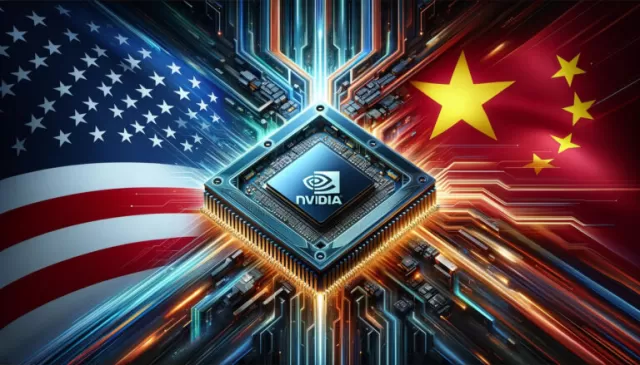
Nvidia, a major player in AI chip technology, is developing a new version of its flagship AI chips tailored for the Chinese market that complies with current U.S. export regulations. According to three informed sources, this initiative is part of Nvidia's strategy to maintain its market position amid complex regulatory challenges.
Earlier this year, Nvidia unveiled its "Blackwell" chip series, which is set to enter mass production later in 2024. The B200, a standout in this series, promises performance up to 30 times faster than its predecessor for certain tasks, such as generating responses from chatbots. This performance leap highlights Nvidia's commitment to advancing AI technology.
Nvidia intends to partner with Inspur, a significant distributor in China, to launch and distribute the new chip, provisionally named "B20." Although neither Nvidia nor Inspur has publicly commented on this yet, this collaboration is expected to ensure effective market penetration and availability to Chinese consumers.
In 2023, the U.S. tightened export controls on advanced semiconductors to China, aiming to limit advancements that could enhance China's military capabilities. Nvidia has since developed three chips specifically for the Chinese market. This regulatory environment has allowed Chinese tech companies like Huawei and startups like Enflame, backed by Tencent, to gain ground in the AI processor sector.
A version of the Blackwell series designed for China could strengthen Nvidia's competitive stance against these local firms. Despite a decline in revenue from China—down to 17% in the year ending January from 26% two years earlier—Nvidia remains a significant player in the Chinese market. The company's H20 chip, its most advanced offering for China, initially struggled but has recently seen rapid sales growth. SemiAnalysis estimates that Nvidia will sell over one million H20 chips in China this year, generating over $12 billion in revenue.
The geopolitical landscape continues to influence the semiconductor industry. The U.S. is expected to maintain pressure on semiconductor export controls, potentially collaborating with the Netherlands and Japan to further limit chipmaking equipment sales to China. Additionally, the Biden administration is considering preliminary measures to regulate the most advanced AI models, aiming to oversee the core software of systems like ChatGPT.
Recent reports of the U.S. contemplating a foreign direct product rule—which would block products made with American technology from being sold—caused global chip stocks to decline. Despite these challenges, Nvidia's innovative strategies and adaptive developments illustrate its resilience and determination to uphold its leadership in the market.