Forest Loss Drives Mosquitoes to Feed on Human Blood
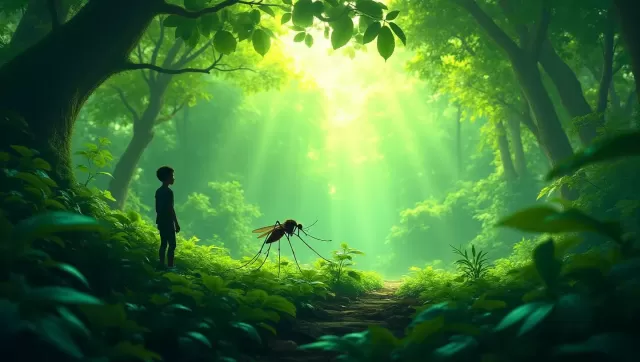
Brazil's Atlantic Forest, a massive ecosystem once teeming with unparalleled biodiversity, is facing a critical transformation. Urban expansion and agricultural development have fractured this landscape, leaving only about 30% of the original forest standing. As humans push deeper into these fragmented wildlands, the ecological balance is shifting in a way that directly impacts public health. Recent research indicates that local mosquito populations, deprived of their traditional animal hosts, are increasingly targeting humans for survival.
Genetic Analysis of Mosquito Feeding Patterns
To investigate how these insects are adapting to a changing environment, a research team deployed light traps within two major ecological reserves in the state of Rio de Janeiro. Their goal was to capture female mosquitoes that had recently fed to analyze the biological markers within their systems. By using advanced DNA sequencing techniques—essentially a genetic barcoding system—the scientists were able to match the blood found inside the mosquitoes to specific vertebrate species.
The results of the study revealed a diverse range of feeding habits among the 52 species collected. While some mosquitoes still fed on amphibians, birds, and small mammals, a significant portion of the samples pointed toward a singular, dominant source. Out of the successfully identified blood meals, the vast majority were traced back to human hosts.
Environmental Stressors and Host Availability
The shift in mosquito behavior isn't necessarily a biological "choice" but rather a consequence of necessity. As deforestation wipes out the natural habitats of birds and forest mammals, the "buffet" of options for mosquitoes shrinks. Experts suggest that while some species may have an innate pull toward certain hosts, environmental proximity is the most powerful driver.
In areas where the forest has been thinned, humans become the most abundant and accessible source of nutrition. This creates a dangerous intersection where wildlife, insects, and people overlap more frequently than ever before. The study even found evidence of "mixed meals," where a single mosquito had bitten both an animal and a human, highlighting the fluid nature of disease transmission paths.
Rising Threats to Public Health
This dietary shift is a significant red flag for epidemiologists. When mosquitoes in high-biodiversity areas develop a preference for humans, the likelihood of "spillover" events—where viruses jump from wildlife to people—increases exponentially. The Atlantic Forest is a known reservoir for several dangerous pathogens, including:
- Yellow Fever
- Dengue and Zika viruses
- Chikungunya
- Mayaro and Sabiá viruses
These diseases represent a major burden on the healthcare system and can lead to severe, long-term complications for those infected. Understanding exactly which mosquitoes are biting humans, and where, is the first step in predicting the next major outbreak before it begins.
Data Gaps and the Path to Prevention
While the current findings are illuminating, researchers acknowledge that there is much more to learn. Identifying the source of a blood meal is a complex process, often hampered by the rapid digestion of DNA within the mosquito. With only a small percentage of captured insects yielding clear genetic data, the scientific community is calling for more robust, large-scale studies to refine these detection methods.
This research serves as an early warning system. By identifying high-risk zones where mosquitoes show a strong human preference, local authorities can implement targeted surveillance and more effective pest control measures. In the long term, the most effective solution may lie in ecological restoration; by preserving the balance of the forest and its natural inhabitants, we can reduce the pressure on mosquitoes to seek out human hosts, effectively creating a biological buffer that protects public health.