A New Home in Abu Dhabi: African Manatees Thrive and Inspire Conservation
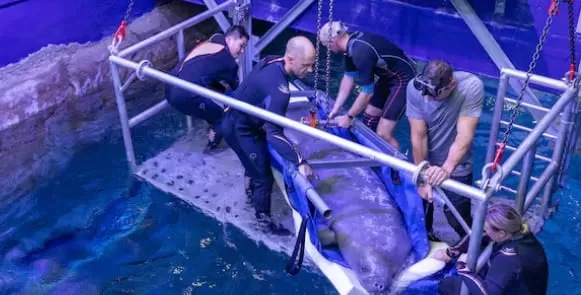
Two African manatees, Nyokoti and Sengou, are captivating visitors at The National Aquarium Abu Dhabi, a year after being given a new home in the UAE. Relocated from South Korea, their arrival marked a collaboration between the aquarium, the Mohamed bin Zayed Species Conservation Fund, and the African Aquatic Conservation Fund.
This ambitious project sought not only to provide the two manatees with a fresh start but also to champion conservation efforts and increase awareness of the marine world's wonders. Aged between 15 and 20, Nyokoti and Sengou likely wouldn't have survived in the wild. However, with specialized care and a tailored habitat at the aquarium, they've thrived and become a major attraction in Al Qana.
"They are quite a magical animal," said Paul Hamilton, general manager at the aquarium, who accompanied the manatees on their journey. "They are not something that you get to lay eyes on very often."
Visitors can watch the manatees being fed by divers. Their diet consists mainly of greens, consuming up to 50 kilograms daily, including lettuce, spinach, and pak choi, with beetroot as a favorite treat. They move along the sea floor in a unique "walking" manner and exhibit distinct personalities. Sengou is more outgoing, while Nyokoti is more reserved and closer to his natural wild behavior.
The aquarium, one of the few worldwide to house these elusive creatures, is hosting a week-long celebration from March 31 to April 6. The festivities include live feeding sessions, educational talks, children's activities, and musical performances.
Manatees are relatives of the dugong, found in UAE waters, and are typically shy, gentle, and solitary animals rarely observed in the wild, usually avoiding human interaction. The African manatee is classified as "vulnerable" on the IUCN Red List of Threatened Species, inhabiting shallow coastal waters, wetlands, and rivers from Senegal to Angola. Growing up to 450cm in length and weighing up to 400kg, these animals are rarely seen, making their threatened status due to poaching, by-catch, dam entrapment, and habitat loss less widely known.
Clinton Factheu, a PhD student from Cameroon studying the manatees, highlighted the importance of improving the lives of local communities to reduce poaching. He also emphasized their role in ecosystems, controlling invasive plants and cleaning waterways. The partnership provides him an amazing opportunity to study these animals.
The aquarium will donate a portion of its retail shop proceeds to manatee conservation, managed by the Mohamed bin Zayed Species Conservation Fund in partnership with the African Aquatic Conservation Fund. This project will also support at least ten African researchers and graduate students.
Nicolas Heard, acting director general at the Mohamed bin Zayed Species Conservation Fund, explained that the manatees' presence in Abu Dhabi enables researchers to study them and gather crucial data for their conservation. The fund has provided over $27 million in grants since 2008 to help conserve 1,789 species threatened with extinction, a critical effort given the alarming statistic that over 47,000 species globally face extinction.
"Most people don't have the opportunity even to see just the nostril of a manatee in the wild and yet here there's an opportunity for people to engage with the animals, to view them, to observe them – to wonder at how amazing they are," said Mr. Heard, emphasizing the importance of engaging with these charismatic creatures.