
Managing Oral Bacteria: A New Approach
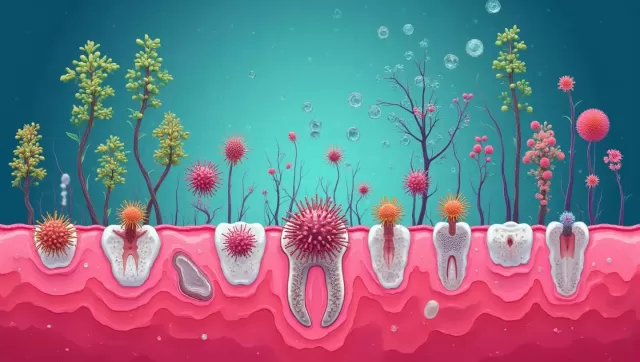
The rise of antibiotic-resistant bacteria presents a significant threat to global health. For decades, the primary strategy against harmful bacteria has been eradication. However, considering that countless bacterial species are essential for our well-being, a new question is emerging: What if we could manage bacterial behavior instead of simply trying to destroy it? This innovative approach focuses on influencing how microbes act, potentially leading to new ways to prevent disease and enhance human health.
The Secret Language of Oral Bacteria
Our mouths are bustling ecosystems, home to approximately 700 distinct species of bacteria. These microscopic organisms are not isolated; they engage in constant, sophisticated communication through a process known as quorum sensing. This chemical dialogue allows them to synchronize their activities and function as a collective. A key component of this communication network involves signaling molecules called N-acyl homoserine lactones (AHLs), which function like messages passed between different bacterial groups.
Decoding the Signals in Dental Plaque
A pioneering study from the University of Minnesota's College of Biological Sciences and School of Dentistry delved into this microbial communication network. Researchers aimed to understand if they could intentionally disrupt these signals to prevent the formation of harmful dental plaque and foster a healthier balance of oral bacteria. Their findings, featured in the journal npj Biofilms and Microbiomes, could fundamentally alter how we approach the treatment of bacterial infections.
The investigation yielded several critical insights into how oral bacteria organize and interact:
- Bacteria situated in oxygen-abundant environments, such as the area above the gumline, produce AHL signals. These chemical messages travel and are received by bacteria living in oxygen-deprived pockets below the gumline.
- When the research team used specific enzymes, known as lactonases, to break down and eliminate these AHL signals, they observed a significant increase in the populations of bacteria associated with good oral health.
- This suggests that targeted enzymatic treatments could be used to guide the composition of dental plaque, encouraging a community of beneficial microbes.
A New Model for Oral Health
The development of dental plaque can be compared to the growth of a forest. The first organisms to arrive are pioneer species like Streptococcus and Actinomyces. These are typically harmless and form the foundation of a healthy oral environment. Over time, if conditions change, more diverse and often problematic bacteria, such as the "red complex" group linked to severe periodontal disease, can colonize the area. By interrupting the chemical conversations these bacteria use to organize, it may be possible to keep the microbial community in its initial, health-associated state.
The availability of oxygen proved to be a pivotal factor in the study. When AHL signaling was blocked in an oxygen-rich setting, beneficial bacteria flourished. Conversely, when researchers introduced AHLs into an oxygen-poor environment, it stimulated the growth of disease-causing bacteria. This discovery implies that quorum sensing serves different purposes above and below the gumline, a crucial consideration for developing effective treatments for periodontal conditions.
Toward Microbiome-Based Therapies
The research team's next objective is to map out how bacterial signaling varies in different areas of the mouth and among individuals with varying stages of gum disease. A deeper understanding of how these microbial communities function could unlock novel strategies for preventing periodontal disease. The ultimate goal is not to wage an indiscriminate war on oral bacteria, but to strategically maintain a healthy and balanced microbial ecosystem. This paradigm of managing the microbiome holds immense promise, potentially extending to therapies for other parts of the body where microbial imbalances are connected to chronic illness and even certain cancers.