Tiny Mammal Diversity Unlocked by Footprints
While high-profile conservation efforts often focus on charismatic megafauna like pandas and lions, a significant and largely overlooked emergency is occurring among the world's smaller creatures. These tiny mammals serve as essential indicators of environmental health, yet their populations are plummeting. Until recently, tracking these animals was an immense challenge because many "cryptic species" look virtually identical to one another, despite playing very different roles in their respective habitats.
A team of researchers has developed a breakthrough solution to this problem by turning to the ancient art of tracking, modernized with digital precision. By analyzing the subtle geometric patterns in footprints, scientists can now identify nearly indistinguishable species with up to 96 percent accuracy. This innovation provides a non-invasive, ethical, and cost-effective way to monitor biodiversity on a global scale.
The Problem with Identical Species
The difficulty in monitoring small mammals often stems from their physical similarities. In the scientific community, these are known as cryptic species—animals that appear identical to the naked eye but possess distinct genetic signatures and ecological requirements.
Traditional methods of telling these species apart often involve DNA sampling, which is frequently:
- Expensive to process in a lab.
- Invasive for the animals involved.
- Slow to provide actionable data for conservationists.
Because different species respond uniquely to climate change and habitat loss, failing to distinguish between them can lead to inaccurate data regarding ecosystem stability.
Decoding Tracks with Digital Morphometry
To address this, researchers focused on two specific types of sengi (also known as elephant shrews) in South Africa: the Eastern Rock sengi and the Bushveld sengi. While these two animals look like twins, they occupy different terrains, such as rocky outcrops versus sandy plains.
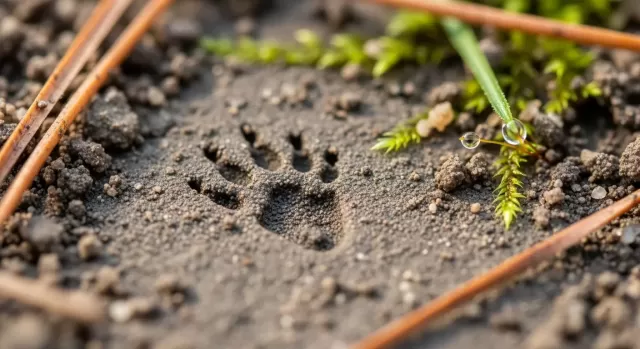
The research team discovered that while the animals' bodies look the same, their feet tell a different story. By capturing high-resolution images of tracks made in charcoal dust, the team used specialized morphometry software to measure over 100 different characteristics of the footprints. Through statistical analysis, they identified nine specific measurements that acted as a "digital fingerprint" for each species.
Field Success and Range Discoveries
The methodology was put to the test in the Telperion and Tswalu Kalahari Nature Reserves. The process of gathering data was designed to be as stress-free as possible for the wildlife:
- Animals were lured into humane traps filled with comfortable bedding and a mixture of oats, peanut butter, and Marmite.
- Once captured, they were placed in a "footprint box" where they walked across charcoal-dusted paper.
- After leaving their tracks, the animals were immediately released back into the wild at the exact location where they were found.
The results were transformative. Not only did the model identify the species with near-perfect accuracy, but it also revealed that Eastern Rock sengis were living in areas where they were previously thought to be absent. This suggests that small mammals may be shifting their ranges in response to environmental changes faster than scientists realized.
A New Metric for Planetary Health
This footprint-based identification system represents a major shift toward "citizen science" and ethical monitoring. Because the technology is flexible and does not require expensive laboratory equipment, it can be deployed in diverse ecosystems across the globe.
By providing a reliable and routine way to check the "pulse" of the environment, this method allows researchers to use small mammals as an early warning system. Shifts in these tiny populations can signal larger ecological disruptions long before they affect larger, more visible animals. The goal now is to expand the database, training the AI models to recognize the tracks of other cryptic species and offering a new, quiet revolution in the fight to preserve global biodiversity.